Follow Me On Social Media!

Garlic Herb Roasted Turkey Breast

Garlic Herb Roasted Turkey Breast
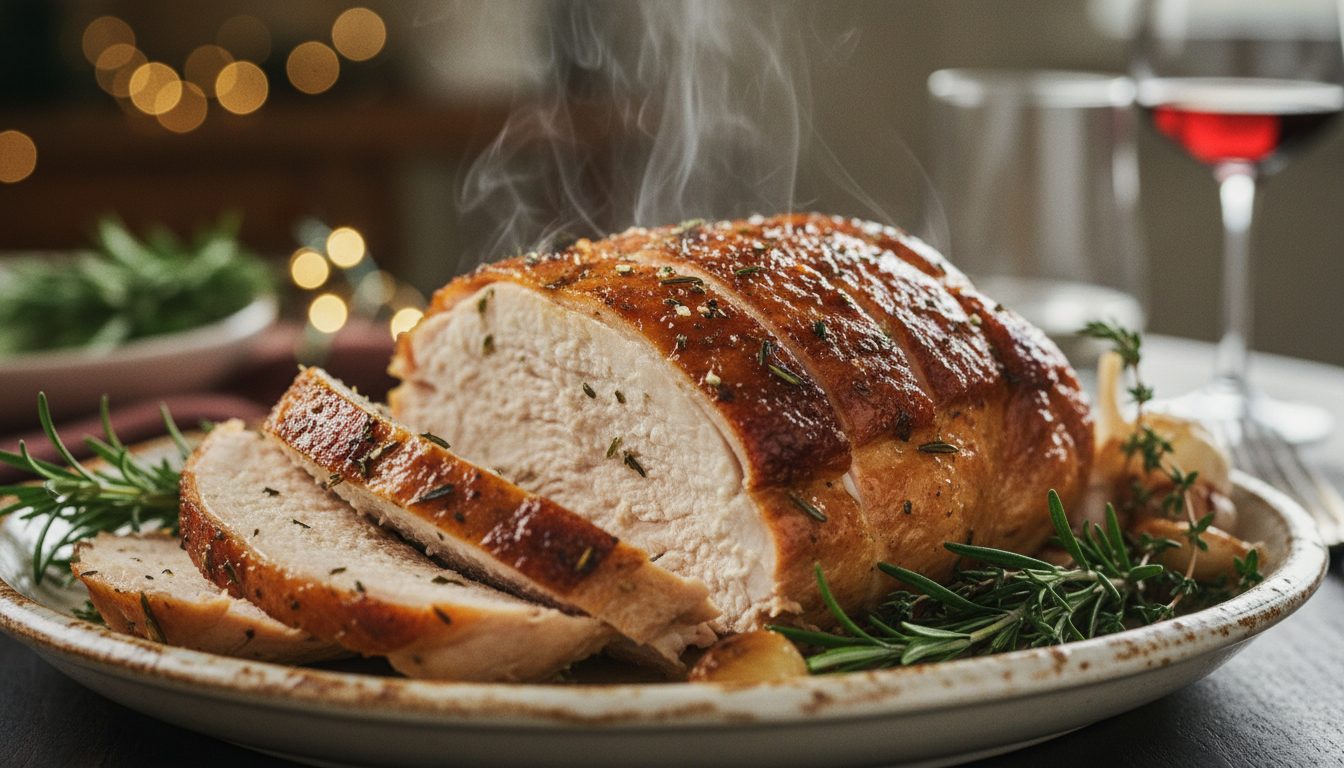
When it comes to holiday centerpieces or elegant Sunday dinners, the Garlic Herb Roasted Turkey Breast stands as a testament to the idea that simplicity often leads to the most sophisticated results. While many people associate turkey exclusively with the sprawling chaos of Thanksgiving, a well-roasted turkey breast is a versatile, high-protein powerhouse that fits perfectly into a healthy lifestyle year-round. This recipe focuses on achieving two main goals: succulent, moist meat and a shatteringly crisp, herb-infused skin.
The Appeal of Turkey Breast
Choosing a turkey breast over a whole bird offers several advantages. First, it is significantly faster to cook, making it a viable option for a weeknight meal. Second, it is much easier to carve, yielding perfect, uniform slices that look beautiful on a platter. For those focusing on lean protein intake, the breast is the healthiest part of the bird, offering a dense source of nutrients without the higher fat content found in dark meat. By infusing it with aromatic garlic and fresh herbs, we elevate this lean cut from “diet food” to a gourmet experience.
Ingredients
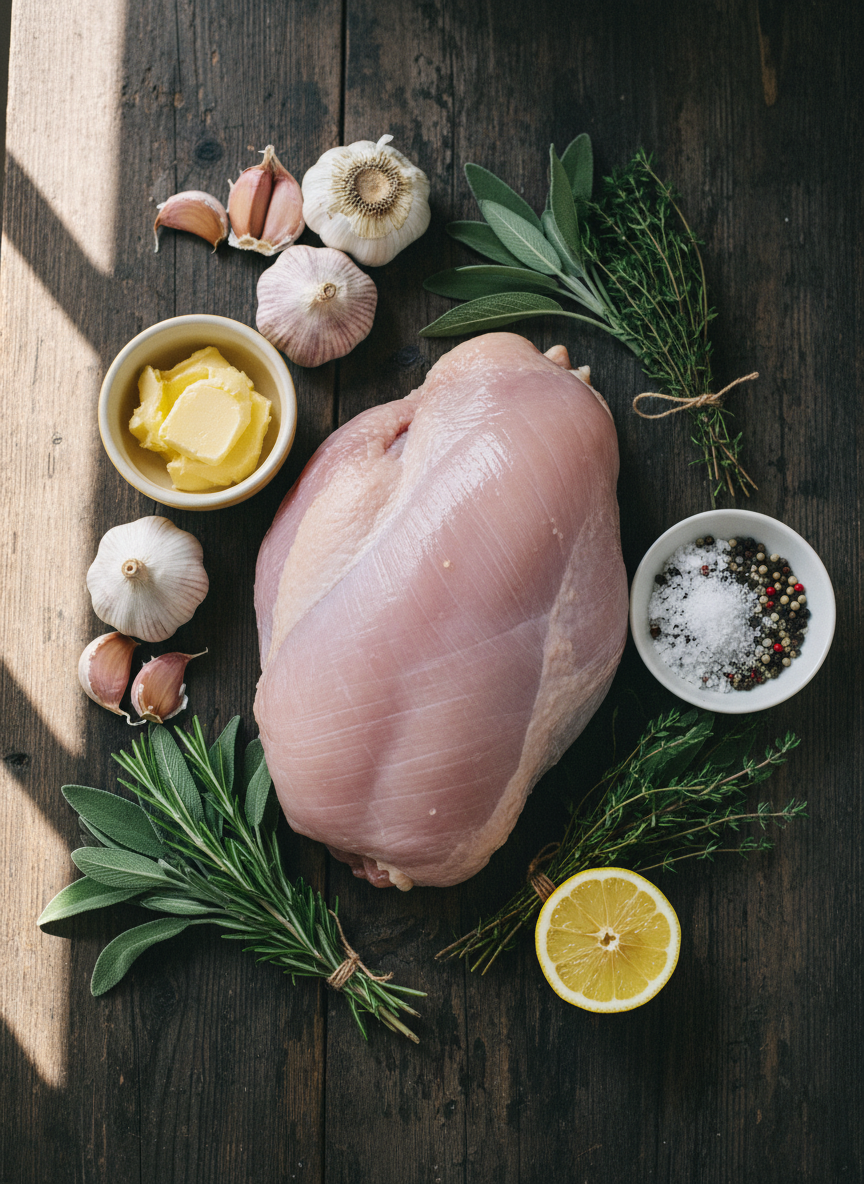
To create the ultimate Garlic Herb Roasted Turkey Breast, quality of ingredients is paramount. Fresh herbs provide a vibrancy that dried versions simply cannot match.
- Turkey Breast: One 4–6 pound bone-in or boneless turkey breast (skin-on is essential for flavor and moisture).
- Butter: Unsalted, softened to room temperature. This acts as the carrier for our aromatics.
- Garlic: 6–8 cloves, finely minced or pressed. Don’t be shy; the garlic mellows beautifully as it roasts.
- Fresh Rosemary: Finely chopped. Its woody notes pair perfectly with poultry.
- Fresh Thyme: Leaves stripped from the stem. Adds a subtle, earthy sweetness.
- Fresh Sage: Finely chopped. The classic “poultry” herb that brings a savory depth.
- Extra Virgin Olive Oil: Helps to crisp the skin and prevents the butter from burning too quickly.
- Kosher Salt and Coarse Black Pepper: Essential for seasoning the meat deeply.
- Lemon: Zest and juice, to cut through the richness and brighten the overall profile.
- Chicken or Turkey Stock: To pour into the bottom of the roasting pan, keeping the environment moist.
The Art of the Herb Butter Rub
The secret to a flavorful roast lies in the compound butter. In a small mixing bowl, combine the softened butter, olive oil, minced garlic, chopped rosemary, thyme, sage, lemon zest, salt, and pepper. Use a fork to mash everything together until it forms a uniform paste. This mixture serves a dual purpose: it seasons the meat through the skin and creates a protective barrier that keeps the juices locked inside while the exterior browns.
Step-by-Step Instructions
1. Preparation
Remove the turkey breast from the refrigerator about 30 minutes before you plan to cook it. Bringing the meat closer to room temperature ensures even cooking. Pat the turkey extremely dry with paper towels. Any moisture on the skin will lead to steaming rather than roasting, preventing that golden-brown finish we desire.
2. Applying the Flavor
Carefully loosen the skin from the meat using your fingers, being careful not to tear it. Take about half of your herb butter and spread it directly onto the meat underneath the skin. Spread the remaining butter all over the exterior of the skin. Season the outside with an extra sprinkle of salt and pepper for texture.
3. Roasting
Preheat your oven to 375°F (190°C). Place the turkey in a roasting pan fitted with a rack. Pour about a cup of stock into the bottom of the pan along with a few lemon slices and extra herb sprigs. Roast until a meat thermometer inserted into the thickest part of the breast reaches 165°F (74°C). Depending on the size, this usually takes about 15–20 minutes per pound.
4. The Importance of Resting
Once the turkey reaches the target temperature, remove it from the oven and transfer it to a cutting board. Tent it loosely with aluminum foil and let it rest for at least 15–20 minutes. This is perhaps the most crucial step. Resting allows the muscle fibers to relax and reabsorb the juices. If you slice it immediately, all that moisture will run out onto the board, leaving you with dry meat.
Techniques for Maximum Juiciness
If you have extra time, consider a “dry brine.” Season the turkey with salt 24 hours in advance and leave it uncovered in the fridge. This seasons the meat deeply and dries out the skin for maximum crispiness. Additionally, using a meat thermometer is the only way to guarantee success. Overcooking turkey by even 5 degrees can result in a noticeable loss of moisture.
Serving Suggestions
A Garlic Herb Roasted Turkey Breast is a versatile centerpiece. For a traditional feel, serve it alongside roasted root vegetables, garlic mashed potatoes, and a savory gravy made from the pan drippings. For a lighter, modern approach, serve thin slices over a bed of arugula with a lemon-tahini dressing or alongside a vibrant quinoa salad. The leftovers are perhaps the best part—imagine a high-quality turkey club sandwich with avocado, sprouts, and a schmear of pesto aioli.
Nutritional Benefits
Turkey is often overlooked in the daily diet, but it is one of the densest sources of high-quality protein. It is rich in B vitamins, particularly B6 and B12, which are essential for energy production and brain health. It also contains selenium, an antioxidant that supports immune function. By roasting it with garlic and herbs instead of heavy cream sauces, you maintain its status as a lean, heart-healthy meal option.
Conclusion
Mastering the Garlic Herb Roasted Turkey Breast is a skill every home cook should have in their repertoire. It is elegant enough for guests but simple enough for a Tuesday night. By focusing on the details—drying the skin, using fresh herbs, and allowing for a proper rest—you transform a standard piece of poultry into a culinary masterpiece that is as healthy as it is delicious.