Follow Me On Social Media!

Lentil and Spinach Beef Stew

Lentil and Spinach Beef Stew
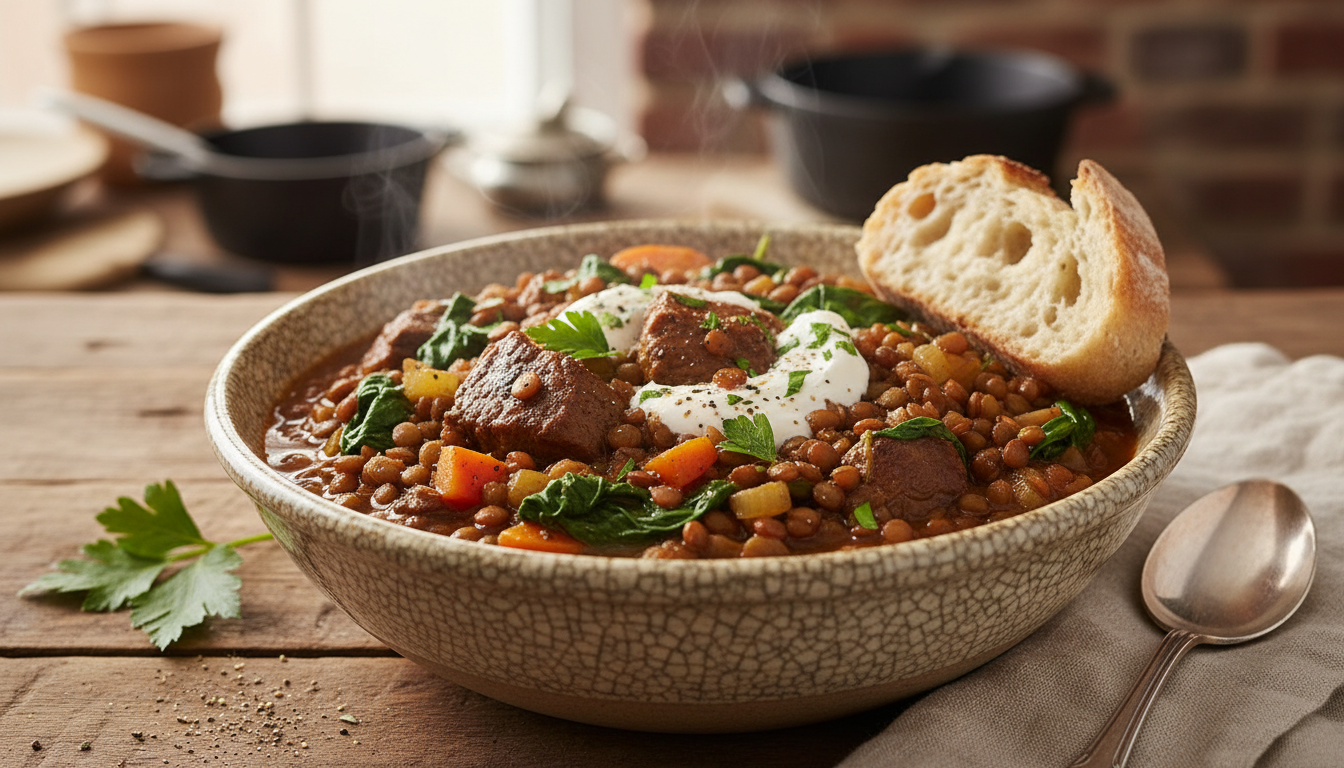
When the temperature drops and the days grow shorter, there is nothing quite as comforting as a simmering pot of stew on the stove. While traditional beef stew is a classic, the addition of lentils and fresh spinach transforms this humble dish into a nutritional powerhouse that is as hearty as it is healthy. This Lentil and Spinach Beef Stew is the ultimate one-pot meal, balancing the rich, savory depth of slow-cooked beef with the earthy texture of green lentils and the vibrant, iron-rich goodness of fresh baby spinach.
The Nutritional Powerhouse: Why This Stew Works
This recipe isn’t just about comfort; it is about fueling your body with high-quality ingredients. By combining beef and lentils, you are creating a dish that is exceptionally high in protein and dietary fiber. Beef provides essential Vitamin B12 and zinc, while lentils offer a complex carbohydrate source that keeps you full for hours. The addition of spinach at the very end ensures you get a boost of Vitamin A, Vitamin C, and iron without losing the vegetable’s delicate texture to the long cooking process.
Furthermore, lentils are incredible at absorbing the flavors of the broth and the aromatics. Unlike potatoes, which can sometimes become mealy in a stew, lentils maintain a slight bite (if using green or brown varieties) and add a rustic thickness to the liquid, reducing the need for heavy flours or thickeners.
Ingredients
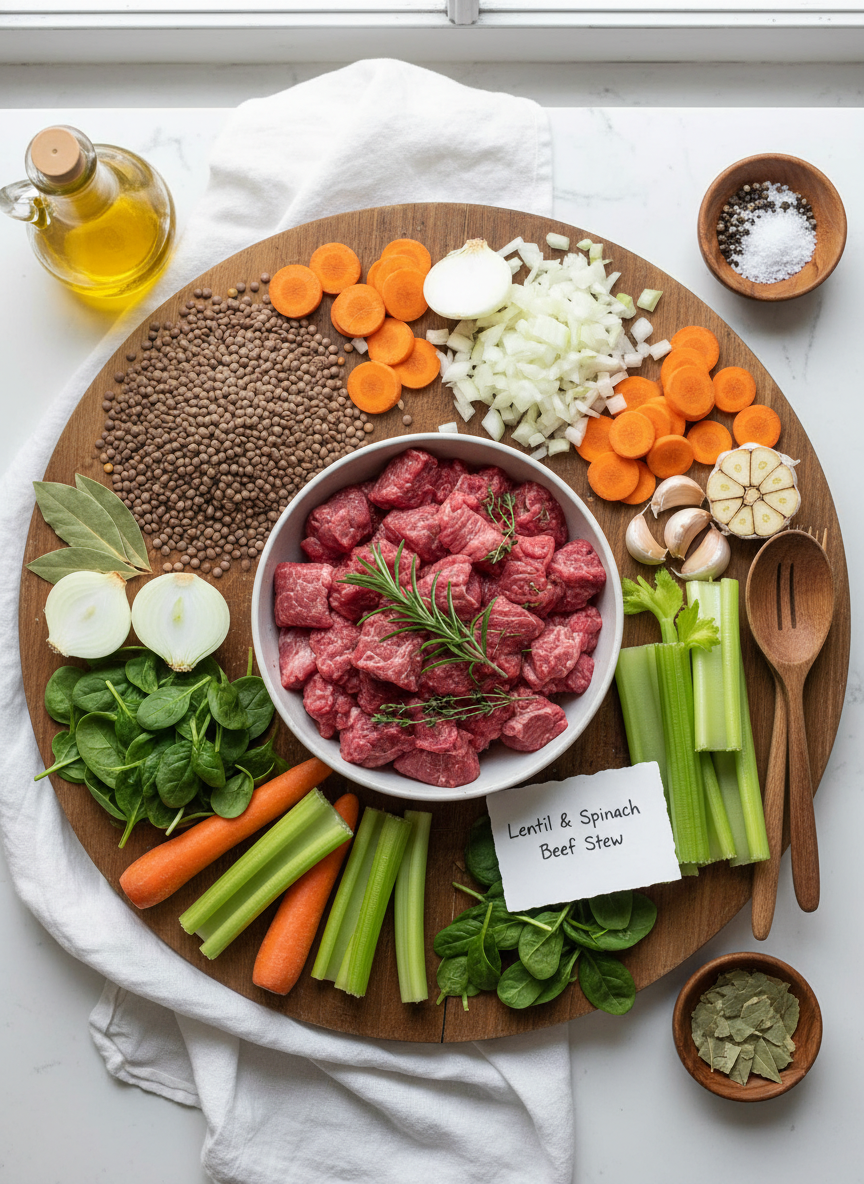
- 2 lbs Beef Chuck Roast: Cut into 1-inch cubes. Chuck is ideal because its connective tissue breaks down during the slow simmer, resulting in melt-in-your-mouth tenderness.
- 1 cup Dry Green or Brown Lentils: Rined and sorted. These varieties hold their shape better than red lentils during long cooking.
- 4 cups Fresh Baby Spinach: Roughly chopped or left whole.
- 1 large Yellow Onion: Diced.
- 3 medium Carrots: Peeled and sliced into rounds.
- 2 stalks Celery: Diced.
- 4 cloves Garlic: Minced.
- 2 tablespoons Tomato Paste: For acidity and deep umami flavor.
- 6 cups Beef Bone Broth: Or a high-quality low-sodium beef stock.
- 1 cup Dry Red Wine (Optional): Such as Cabernet Sauvignon or Merlot, to deglaze the pan.
- 2 tablespoons Olive Oil: For searing the meat.
- 2 Dried Bay Leaves: For subtle herbal depth.
- 1 teaspoon Dried Thyme: Or 3 sprigs of fresh thyme.
- 1 teaspoon Smoked Paprika: For a hint of woodsy warmth.
- Salt and Freshly Cracked Black Pepper: To taste.
Step-by-Step Preparation Guide
1. Searing the Beef (The Maillard Reaction)
The secret to a truly deep, rich stew starts with searing the meat. Pat your beef cubes dry with paper towels; moisture is the enemy of a good sear. Season the beef generously with salt and pepper. Heat olive oil in a large Dutch oven or heavy-bottomed pot over medium-high heat. Working in batches to avoid overcrowding the pan, brown the beef on all sides until a dark golden crust forms. Remove the beef and set it aside on a plate.
2. Softening the Aromatics
Lower the heat to medium. In the same pot, add the diced onion, carrots, and celery (the classic mirepoix). Sauté for about 5-7 minutes, scraping up the brown bits (fond) left behind by the beef. These bits are concentrated flavor. Once the onions are translucent, add the minced garlic and tomato paste. Stir constantly for 2 minutes until the tomato paste turns a darker brick-red and smells fragrant.
3. Deglazing the Pot
If you are using red wine, pour it in now. Use a wooden spoon to scrape the bottom of the pot thoroughly. Let the wine simmer and reduce by half. This process removes the harsh alcohol bite while leaving behind the complex fruit and tannin notes that elevate the beef.
4. The Simmer Phase
Add the browned beef (and any juices from the plate) back into the pot. Pour in the beef broth and add the dried lentils, bay leaves, thyme, and smoked paprika. Bring the mixture to a gentle boil, then immediately reduce the heat to low. Cover the pot with a tight-fitting lid and let it simmer for about 60 to 75 minutes. You want the beef to be tender and the lentils to be soft but not mushy.
5. Incorporating the Spinach
Once the beef and lentils are perfectly cooked, taste the broth. Adjust the seasoning with more salt or pepper if needed. Turn off the heat. Add the fresh baby spinach to the pot. It will look like a lot of greens, but they will wilt down significantly in the residual heat. Gently fold the spinach into the stew until it is bright green and tender.
Pro-Tips for the Best Stew Experience
Choosing Your Lentils: Avoid using red or yellow lentils for this specific recipe unless you want a very thick, porridge-like consistency. Red lentils break down completely. Green (Puy) or standard brown lentils are the gold standard for stews because they provide a distinct textural contrast to the soft beef.
The Importance of Low Heat: Boiling beef for a long time makes it tough and stringy. A slow, gentle simmer allows the collagen in the meat to transform into gelatin, which creates that luxurious mouthfeel associated with high-end stews.
Make it Ahead: Like most braised dishes, Lentil and Spinach Beef Stew tastes even better the next day. The flavors continue to meld and develop in the refrigerator. Just reheat it gently on the stove, adding a splash of broth if it has thickened too much overnight.
Variations and Substitutions
While this recipe is excellent as written, you can easily adapt it to your pantry. If you don’t have spinach, kale or Swiss chard are wonderful substitutes, though they require about 5-10 minutes of simmering to soften. For a vegetable-heavy version, add diced parsnips or sweet potatoes along with the carrots. If you prefer a bit of heat, a pinch of red pepper flakes added with the garlic can provide a nice back-of-the-throat warmth.
Serving Suggestions
This stew is a complete meal on its own, but it pairs beautifully with a slice of crusty sourdough bread or a side of garlic mashed potatoes. For a lighter touch, serve it with a simple side salad tossed in a lemon vinaigrette to cut through the richness of the beef.
Storage and Freezing
Store leftovers in an airtight container in the refrigerator for up to 4 days. This stew also freezes exceptionally well. Allow it to cool completely before transferring to freezer-safe bags or containers. It will stay fresh for up to 3 months. When ready to eat, thaw it in the fridge overnight and reheat it slowly on the stovetop.
Final Thoughts
Lentil and Spinach Beef Stew is more than just a recipe; it is a lesson in how simple ingredients can be elevated through proper technique. By taking the time to sear your meat and layer your flavors, you create a dish that feels sophisticated yet remains deeply rooted in home-cooked tradition. Whether you are looking for a high-protein post-workout meal or a cozy Sunday dinner, this stew is sure to become a staple in your kitchen rotation.